
For a long time, many clients have consulted us with questions like: "What is a trust?", "What are the uses of a trust?", and "How can I plan my assets and taxes?".
Today, Oushin will help you understand the ins and outs of trusts.
NO. 1|One
What is a Trust
Basic Definition of a Trust
Before understanding a trust, we need to understand three concepts:
Settlor:
The settlor is the entity that establishes the trust, also known as the donor or grantor. The settlor sets up the trust and legally transfers control of their assets to the trust.
In some types of trusts, the settlor can also be the beneficiary, trustee, or both.
Trustee:
The trustee is a third party that manages the trust assets according to the terms of the trust.
In most countries, the trustee can be a local licensed institution or a private trust company (PTC) established by the settlor.
Beneficiary:
The beneficiary is the individual or company designated to benefit from the trust according to its terms.
The trustee is obligated to manage the trust assets with the goal of maximizing the beneficiary's interests as stipulated in the trust agreement.
A trust is a legal agreement. Trust companies provide services according to the agreement and undertake fiduciary duties.
The settlor (client) transfers ownership of assets to the trustee (e.g., a private trust company); the trustee manages and distributes the trust assets and income according to the agreement to maximize the beneficiary's interests.
The beneficiary can be the settlor themselves, family members, or other designated persons;
Offshore family trusts can hold assets such as overseas cash, equity, and real estate legally owned by the settlor.

Types of Trusts
The most common trusts can be divided into the following three types:
Simple Trust or Bare Trust:
A bare trust is a basic trust, usually where the beneficiary is a minor. The trustee is responsible for managing the trust assets prudently, following the settlor's instructions, to maximize the beneficiary's interests.
Discretionary Trust:
In a discretionary trust, the trustee has absolute control over the management and distribution of the trust's profits. The trustee distributes the trust's income or capital to specific beneficiaries at their discretion.
To ensure the trustee manages the trust according to the settlor's wishes, the settlor usually provides a "letter of wishes" detailing how they wish the trust assets to be managed and distributed.
Life Interest Trust:
A life interest trust, also known as a "holding interest" trust or "fixed interest" trust. The trustee has no discretion over asset distribution. The beneficiary has a "limited interest" in the trust income.
The beneficiary can receive trust income for a specific period (e.g., their lifetime). When the "limited interest" expires, the trust assets automatically belong to the designated beneficiary.
NO. 2|Two
Family Trusts
With the gradual increase of high-net-worth individuals in our country, the demand for wealth inheritance and family management is becoming more urgent.
Under this demand, family trusts are gradually entering the vision of Chinese people.
So what needs of high-net-worth individuals can family trusts meet?
1. Asset Protection
Marital property isolation function
Trust property does not belong to the estate or debt settlement property
2. Wealth Management
Investment management according to client needs
Trusts have a wide range of investment fields
3. Property Inheritance
Flexible distribution according to the settlor's wishes
Orderly planning of asset inheritance
More efficient tax arrangements
4. Information Confidentiality
Avoid complex inheritance procedures
High confidentiality, private information will not be disclosed
Common Family Trust Practices
Isolation Protection Type: Spouse, Children, Parents
Establish a family trust when the business is doing well, so if the business encounters debt risks in the future, the family trust assets are not considered liquidation assets.
Marital Risk Type: Settlor, Children
This type of trust should be arranged early and is not targeted. It mainly encourages marriage while emphasizing inheritance.
Family Care Type: Settlor, Family Members
This arrangement focuses on the part that "cannot be spent, cannot be ruined," using privacy and flexibility to balance family governance and extended family care.
Comprehensive Service Type: Various
The ratio between "assets" and "tools," i.e., "solutions." A comprehensive solution starting from service.
The functions of family trusts vary depending on different structures, actual trust arrangements, and usage. But overall, the settlor can achieve through establishing a trust:
Orderly Inheritance - The trustee will manage the assets according to the settlor's wishes, and the settlor can set terms and restrictions on investment and distribution;
Asset Protection - The legal ownership of assets is held by the trustee, protecting the assets from claims by the settlor's or beneficiary's creditors (effectiveness depends on the trust structure).
Asset Integration - The trust can hold different types of overseas assets, integrating family wealth into one structure.
Eliminate Probate - Trust assets do not need to go through complex, lengthy, and public probate procedures.
Effective Tax Planning - Effectively solve potential estate and gift tax issues, reducing the overall tax burden on family assets through tax deferral and other means.
NO. 3|Three
Offshore Trust Construction
Typical Construction of Family Trusts
In most offshore countries, the trustee of a trust can be undertaken by a professional licensed trust company, with the following main characteristics:
The client acts as the settlor, protector, and investment manager
Personal assets and family assets are already separated
The settlor can add or use trust assets at any time
Traditional trusts do not require probate, are not affected by divorce/creditors, and are suitable for the following needs:
Clients wish to have family assets held by a trust
Do not want family assets to fall into others' hands after their death
But still want some control over family wealth
Prefer family descendants to be motivated and benefit from family wealth
However, the downside of traditional trusts is that the settlor's participation in the operation and management of the trust is relatively low. Although the trustee needs to manage the trust according to the agreement signed by the settlor, once the trust agreement takes effect, the trustee has absolute control over the trust.
To achieve greater control over the trust by the settlor, Oushin suggests clients establish a dedicated Private Trust Company (PTC) to act as the trustee.
The settlor and their family can serve as directors of the PTC to participate in the management of the trust.
The overseas trust structure recommended by Oushin is shown below:
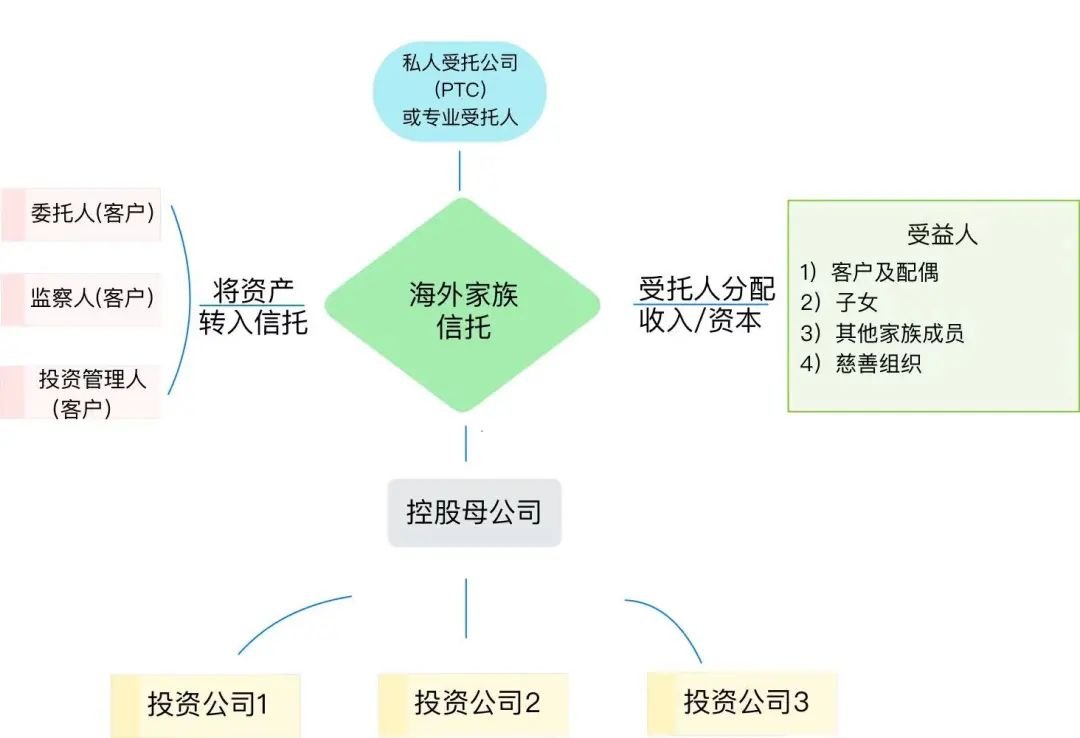
Establishing a PTC as a trustee has the following advantages:
More cost-effective. PTCs do not need to hold a license and are not subject to approval by any financial regulatory authority.
No involvement of third-party trustees, so there is no need to establish a mechanism and process for appointing and removing trustees.
The settlor has more control. The settlor and their family, as directors of the PTC, have absolute control over the trust. The board can make trust-related decisions more effectively and flexibly.
More flexible risk management. Since the PTC is managed by the settlor and their family, they have a better understanding of the trust's investment assets and business model, and compared to third-party trustees, PTCs are more inclined to high-risk investments.
Personal privacy is also protected. The director structure of the PTC does not need to be disclosed externally.
PTCs can make anonymous donations to charitable organizations through related confidentiality mechanisms.
NO. 4|Four
Oushin Trust Establishment Services
and Process Reference
Oushin Overseas Family Trust Services
Through questionnaires, interviews, and understanding the client's background and needs, provide suggestions on the overseas trust domicile and company structure based on the beneficiary's tax status and the client's intentions.
Conduct due diligence on trust-related persons and assets transferred into the trust, including but not limited to the settlor, beneficiaries, offshore company directors, protectors, etc.; and on the source, amount, etc., of trust assets.
Assist lawyers in drafting and reviewing trust establishment documents, such as trust deeds, gift deeds, and the settlor's letter of wishes.
Assist lawyers in drafting, reviewing, and assisting in signing documents required to transfer related assets into the trust, such as company share transfer documents, power of attorney, etc.
Assist in establishing offshore companies under the trust.
Transfer overseas assets into the trust.
Collaborate with related third-party institutions (such as tax lawyers, etc.) to provide trust-related services.
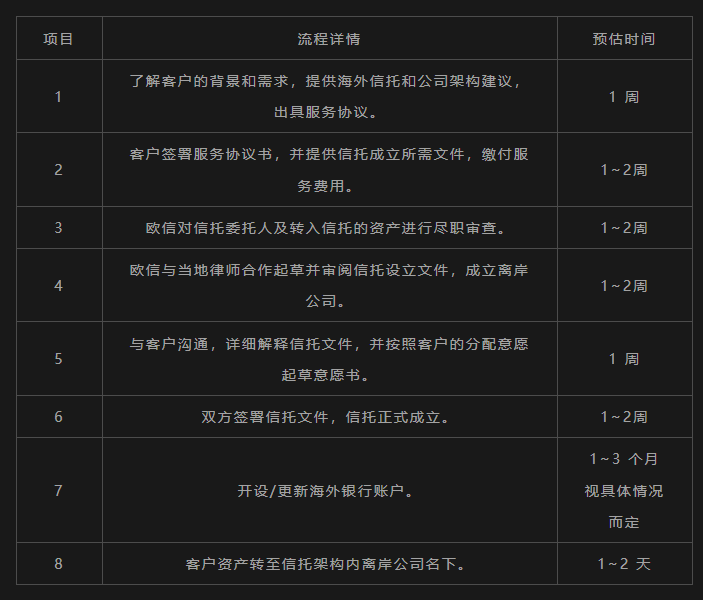
Trust Establishment Process
NO. 5|Five
Oushin Selected Trust Jurisdictions
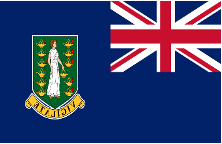
British Virgin Islands (BVI)
The British Virgin Islands is a British overseas territory located in the Caribbean region.
As one of the many offshore jurisdictions, the British Virgin Islands' stable political environment and emphasis on the rule of law are the main reasons attracting international clients to establish companies and trusts there.
BVI's modern legal framework allows clients to establish structured trusts in BVI, fully utilizing local system advantages (effective succession planning, asset protection) while retaining control over trust assets.
Jersey
Located in the English Channel, a British Crown dependency, and one of the historical trust law jurisdictions with a good reputation.
Jersey trust law includes strong, comprehensive, and well-designed protective provisions, making trusts immune from forced heirship claims and ensuring that foreign judgments are not recognized or enforced in Jersey, with high acceptance.
Cayman Islands
The Cayman Islands is a British overseas territory in the western Caribbean Sea, with a relatively stable political and economic environment, serving as an offshore tax-free jurisdiction.
As the world's fifth-largest financial center, the Cayman Islands has a mature financial regulatory system, and its latest revised trust law strengthens the protection of settlors and beneficiaries.
Cayman trusts are broad in scope and diverse in type, and regardless of the purpose of establishing a trust, a suitable trust type can be found in Cayman.
Isle of Man
Located in the Irish Sea, the Isle of Man is a leading offshore trust jurisdiction with its own trust legislation.
Trusts established in the Isle of Man do not require non-resident beneficiaries to pay income tax, capital gains tax, inheritance tax, gift tax, or estate tax; trusts can be quickly established while ensuring complete privacy to reduce bureaucracy.
That's all for today's sharing. Feel free to leave comments and discuss with me in the comment section.