
UK EMI License (Electronic Money Institutions Licensing)
Investment Environment in the UK
The UK is the world's sixth-largest economy. As a long-established capitalist power, the UK's corporate tax has always been at a relatively low level. Due to its lower business costs, the UK has long been one of the popular regions for domestic enterprises to invest overseas.
As one of the world's three major financial centers, London's strong fintech growth and investment prospects are highly favored by investors.
Currently, the UK has over 1,600 fintech companies, most of which are based in London. The concentration of a large number of technical talents has also become one of the potential drivers of future economic growth in the UK.

Electronic Money
"Electronic money" refers to "monetary value stored electronically (including magnetically)."
It is represented by a claim on the issuer, issued upon receipt of funds, intended for payment transactions, and can be accepted by natural or legal persons other than the electronic money issuer.
A simple example: prepaid cards and e-wallets are forms of electronic money.
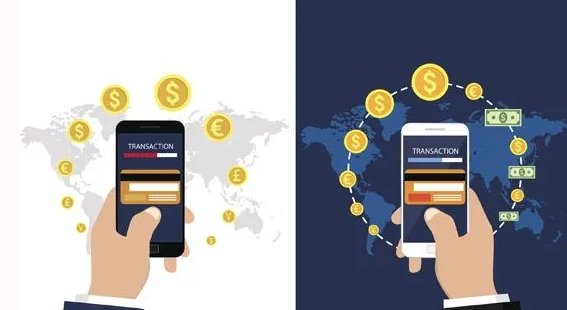
01. What is an Electronic Bank
As the name suggests, an electronic bank promises its customers the same as a regular bank: customers can redeem/transfer funds on demand.
In terms of claims, electronic banks are very similar to banks because electronic money is a credit claim of the holder against the electronic bank, which is a debt of the electronic bank to the electronic money holder.
However, electronic money is both similar to and different from regular bank deposits.
Similarities: Electronic money is equivalent to bank deposits, both used for payments and purchases.
Differences: Banks can mix customer deposits with their own funds and use them for their own purposes, such as issuing loans.
Electronic banks must segregate the funds received from customers from their own funds. Electronic banks can also access customer funds, but they are limited to pure transactional purposes of issuing and redeeming electronic money.
Therefore, traditional banks need to extract a certain portion of deposits as a margin to be submitted to the central bank. (For example: for every £10 of deposits, £1 of own funds is required as a margin)
Electronic banks, on the other hand, require a £10 margin for every £10 of electronic money issued.
Additionally, unlike banks and other credit institutions, small loans issued by electronic banks must come from their own funds and must be credit generated to support payment transactions, such as credit payments, and cannot be used for mortgages.

02. Overview of Electronic Bank License Content
Holders of an electronic bank (electronic money institution) license can provide a variety of services, mainly including:
● Issuing electronic money, such as prepaid cards and e-wallets.
● Cash deposits into payment accounts;
● Cash withdrawals from payment accounts;
● Executing payment transactions, including:
o Transferring funds on the user's payment account;
o Executing direct debit transfers;
o One-off direct debit transfers;
o Executing payment transactions via payment cards or similar means;
o Supporting credit transfers;
o Regular payment orders;
● Executing payment transactions using the credit line of payment service users, including:
o Executing direct debit transfers;
o Direct debit transfers;
o Executing payment transactions via payment cards or similar means;
o Supporting credit transfers;
o Regular orders;
● Issuing payment instruments and acquiring services;
● Money remittance;
● Payment initiation services;
● Account information services.
03. Applying for an Electronic Bank License
1) Time
The UK Financial Conduct Authority (FCA) assesses and decides on electronic money EMI/electronic money institution license applications within three months of receiving a complete application.
In practice, it takes approximately 9-12 months on average to assess the application and make a decision.
2) Initial Capital
The initial capital required for an electronic bank license is 350,000 euros.

About UK EMI
At the beginning of the article, we introduced the advantages of investing in the UK. These are also the advantages of holding a UK EMI.
Having UK EMI status means that enterprises can operate globally and earn profits.
As mentioned above, compared to traditional banks, the business structure of EMI is more flexible.
Requirements for Obtaining a UK Bank License
The minimum capital requirement for establishing a UK EMI/electronic money institution business is 350,000 euros.
Meet the requirements to protect client funds through an independent custodian bank account or insurance policy.
The management of the UK EMI/electronic money institution license must have a good reputation, relevant qualifications, and experience, and pass the qualification review of the UK regulatory authority FCA.

Documents Required for Applying for a UK Electronic Bank License
Company identification information, i.e., company information of the license applicant;
Operational plan;
Business plan and financial forecasts;
Introduction to the corporate organizational structure;
Proof of initial capital, including at least future three-year profit and loss funding beyond the minimum capital;
Management measures to protect user funds;
Compliance and governance arrangements and internal controls;
Procedures for monitoring, handling, and following up on security incidents and security-related customer complaints;
Processes for filing, monitoring, tracking, and restricting access to sensitive payment data;
Continuity plan;
Principles and definitions applicable to collecting performance, transaction, and fraud statistics;
Security policy;
Internal control mechanisms to comply with anti-money laundering and counter-terrorism financing obligations (AML/CTF policy);
Details of qualified shareholder holdings;
Details of the outsourcing plan;
About Oushin
Oushin Overseas Asset Allocation Consulting Company is an international consulting firm established in Europe, primarily assisting clients in the UK, Ireland, Portugal, Lithuania, Malta, and other countries with services including overseas fund establishment, overseas financial license applications, overseas company establishment, overseas bank account opening, overseas real estate investment, and second identity planning.
Currently, the company can assist clients in applying for financial licenses mainly including: forex broker licenses, electronic bank licenses, payment licenses, virtual currency trading licenses, and ICO virtual currency issuance licenses.